
Let's start where your partner actually is
Hesitation about toys rarely means "I don't want you to feel good." It usually means something quieter: "I'm worried this means I'm not enough," or "I don't know how this fits into what we do together," or sometimes just "I don't understand why you'd want that." None of those objections go away if you show up with a box and enthusiasm. They get louder.
I work with couples on this friction constantly. The pattern is always the same. One partner brings up toys. The other shuts down. Then comes the spiral: defensiveness, reassurance that sounds hollow, resentment that this thing that could be fun is now a problem. And the toy stays in a drawer.
It doesn't have to go that way. Most of what I see work comes down to one shift: stop selling the toy, and start listening to what your partner actually cares about.
Why partners get hesitant in the first place
It's rarely about the vibrator itself. It's about what it represents.
Worry #1: Performance anxiety. Your partner thinks the toy means they're not doing something right. Their brain goes: "If they need this, am I not good enough?" This is massive and worth taking seriously. It's not insecurity to overcome. It's a real question they're asking about whether they matter.
Worry #2: Loss of control or connection. Some partners feel like toys introduce a third thing into the bed. Instead of you and them and each other, it becomes you, them, and a device. They worry you'll prefer the toy, or that the physical closeness will change.
Worry #3: Shame or discomfort. This is less common but worth naming. Some people grew up with messaging that toys are wrong, desperate, or kinky in a way that felt dangerous. Your partner might be processing their own baggage here, not actually objecting to you.
Worry #4: Just not understanding. Sometimes it's simple. They don't get why a lemon clitoral vibrator would feel different or better than what you already do together. The gap between their mental model and reality is just blank space.
The conversation before the conversation
Here's what most people skip: they don't talk about pleasure as a shared value first. They just jump to "I want to try this toy."
Start three layers earlier. The conversation isn't about the toy. It's about pleasure itself.
Try something like this. "I've been thinking about our sex life, and I really want to explore what feels best for me. Not because anything's wrong, but because I deserve to know what I actually like. And I think you'd want to know that too. Does that land with you?"
That's not a threat. That's an invitation. You're saying: pleasure matters here. Your pleasure matters. And I want you to care about that.
If your partner can get on board with that premise, everything else gets easier. Because then the lemon vibrator isn't a criticism. It's a tool for exploring something you both decided was worth exploring.
How to introduce it without triggering defensiveness
Once you've talked about pleasure as important, here's the actual introduction.
Timing matters hugely. Not right before sex, not during a conflict, not when they're already stressed about work or family. Find a normal Tuesday. Make tea. Sit down like you're discussing something practical, because you are.
Own your desire without requiring justification. "I've been reading about clitoral vibrators, and I'm genuinely curious what one would feel like. I'd like to try the Lemon from Hallonancys Lemon. And I'd really like to experience that with you, if you're open to it."
Notice what's in there: you're stating what you want, you're being specific (not vague), and you're inviting them. You're not asking permission. You're not convincing. You're informing and including.
Then actually listen. If they say no or hesitate, don't pivot to reassurance. Ask: "What's coming up for you about that?"
Listen to the actual answer. Not the defensive part. The real part. Maybe they say, "I feel like you wouldn't need me." That's the real thing. Address that. "That makes sense you'd think that. But that's not how I experience it. I want this because I want to know my body better, and because I want to share that with you, not instead of you."
Building the experience together
If your partner's willing to try but still nervous, build it in stages. You're not sprinting to penetration or orgasm. You're building familiarity and trust.
Stage one: Just show them. Let them hold the lemon clitoral vibrator. Let them see it's not scary. It's a small, elegant device. Hallonancys Lemon designs products that don't look clinical. That helps. Your partner gets to touch it, turn it on, feel the different patterns. No pressure.
Stage two: Use it yourself alone, with them present. This is powerful. They get to see your body respond. They get to see that you're not checking out or forgetting about them. You're just exploring sensation. Many partners report that watching their partner discover something new and pleasurable is actually hot. It's not threatening. It's connecting.
Stage three: They participate at their own pace. Maybe they hold you while you use it. Maybe they try a pattern on you. Maybe they guide it. You're still in control. They're not replacing anything. They're joining.
Managing the narrative while you're doing this
I see couples where the toy works fine physically but fails emotionally because nobody's managing the story. Your partner's still thinking, "They wanted this more than me." You're thinking, "Why can't they just be happy I'm happy?"
Talk about what's actually happening. "This feels so good to me, and I'm so glad we're doing this together." "I love that you're here with me." "This is about us, not about this replacing anything." Not because you're reassuring them. Because it's true and it matters to say it out loud.
If your partner opens up about why they were hesitant, actually receive that. "I was worried you'd prefer this" deserves "I get why you'd feel that way, and I'm glad we're checking it out because I definitely don't. I like feeling you." Specificity there is everything.
What if they never get fully comfortable
Sometimes you do the whole thing right and your partner still isn't enthusiastic. They're not opposed, but they're not into it.
That's information. And it's worth respecting. You can still use lemon vibrators solo. Your pleasure doesn't require their enthusiasm. But shared pleasure is a different thing, and if that's not available right now, that's data about what you and your partner need to work on together. Maybe that's a conversation with someone trained in couples work. How Lemon Vibrators Rebuild Intimacy After Emotional Distance touches on this more deeply.
But most of the time, hesitation isn't a brick wall. It's a signal that your partner cares about mattering. Address that signal directly, and the toy becomes something you explore together.
The permission you actually need
Here's the thing nobody says: you don't need your partner's permission to use a lemon vibrator. You also don't need their enthusiastic co-signing. What you need is the ability to prioritize your own pleasure without guilt.
Some hesitation comes from your partner. Some comes from you, wearing your partner's discomfort like it's your responsibility to fix it. It's not. Your pleasure is yours.
That said, partnership is real, and shared pleasure is worth protecting. The space between "you don't need permission" and "I want to include you" is where most couples actually live. Navigate it with honesty, not performance.
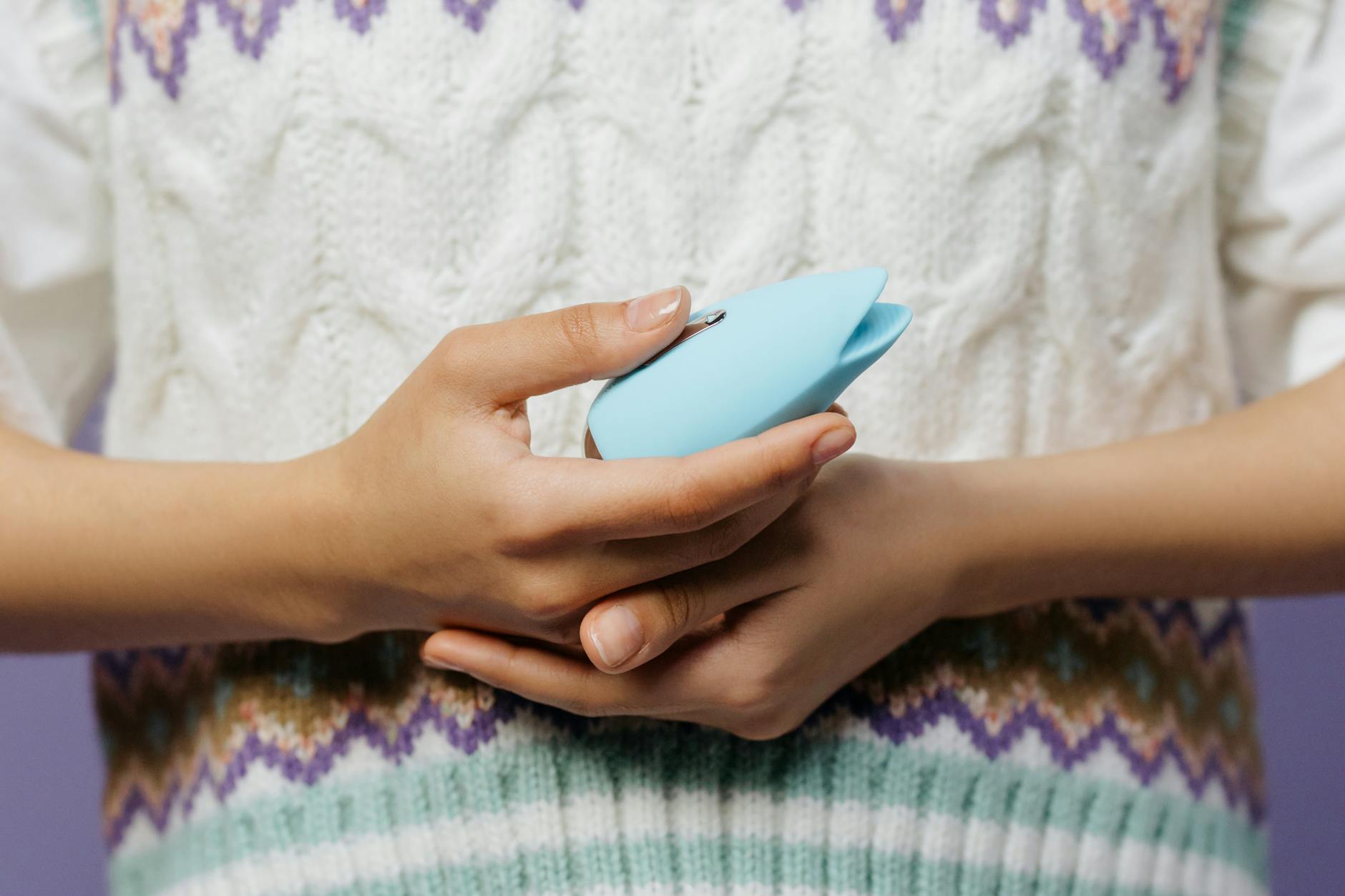
Photo by cottonbro studio on Pexels
When to bring in help
If the hesitation is part of a bigger pattern where pleasure or your needs feel unsafe to bring up, that's different. That's not about the toy. How to Use Lemon Vibrators When Your Partner Has Performance Anxiety addresses some of that dynamic, but if shame or control is showing up in multiple ways, couples counseling is worth considering before the toy becomes a flashpoint.
A good therapist can help you and your partner both get curious about what's underneath the hesitation. Sometimes it's just unfamiliarity. Sometimes it's something real that needs attention.
The FAQ: Partners and toys
What if my partner feels replaced by a lemon clitoral vibrator?
That fear is real and worth addressing directly. You can say something like: "This isn't about replacing you. It's about my body being able to feel different kinds of sensation. Kind of like how you might enjoy different foods, but that doesn't mean you don't want to share meals with me." The key is following through. Don't use the toy as a substitute for partnered sex or connection. Use it as a way to expand what's available to both of you.
Should I ask permission before using a lemon sexual toy with my partner?
There's a difference between asking permission and inviting participation. I'd frame it as: "I'd like to try something new. I'm interested in exploring this with you." That's not asking for approval. That's informing them and including them. You can use it solo without permission. You want them present or participating? That's a different conversation, and yes, you should invite them into it.
How do I know if my partner's hesitation is a dealbreaker?
It's worth asking yourself: Is my partner refusing me pleasure, or are they processing discomfort? If it's the first, that's a relationship pattern worth addressing. If it's the second, you can usually work through it together. Hesitation that comes from vulnerability or fear is different from hesitation that comes from control or judgment.
Can lemon adult toys actually improve sex with a hesitant partner?
Sometimes, yes. If the hesitation comes from not knowing what your body wants, and the toy helps you figure that out, you can then communicate that to your partner. "I discovered I love this kind of pressure" is useful data. Your partner can learn what works for you. But the toy isn't a magic fix for disconnection. It's a tool that works best when the foundation is curiosity and trust.
What's the difference between my solo use and using it together?
Solo, it's about you discovering your body. Together, it can be foreplay, or it can be integrated into partnered sex, or it can be something you do while they're present and engaged. The difference is presence and participation. Your partner doesn't have to touch the toy to be part of the experience. They can be there, watching, supporting, learning what makes you feel good.
How long does it usually take for hesitation to turn into comfort?
It depends on what's underneath it. If it's just unfamiliarity, exposure usually shifts it pretty quickly. A few positive experiences, and the fear shrinks. If it's tied to deeper insecurity about their role or worth in the relationship, that takes longer. You might need multiple conversations, or professional support. Patience here is an act of love.
The real thing
Most partner hesitation comes from caring too much, not too little. Your partner worries about mattering. That's something you can work with. Start there, and the lemon vibrator becomes not a threat but an invitation into knowing each other better.
Your pleasure matters. Your partner's comfort matters. And usually, you can honor both at the same time.