Here's the thing about performance anxiety
It's not really about performance. It's about the belief that their body isn't enough, that they need to do something special to make you feel good. And the harder they try, the less they can feel anything at all. That paradox is brutal to live inside.
Performance anxiety hijacks the nervous system. Blood pressure rises, cortisol spikes, and the parasympathetic system that allows arousal to build just shuts down. Your partner can be fully present emotionally and still feel completely absent in their body.
Why lemon vibrators change the equation
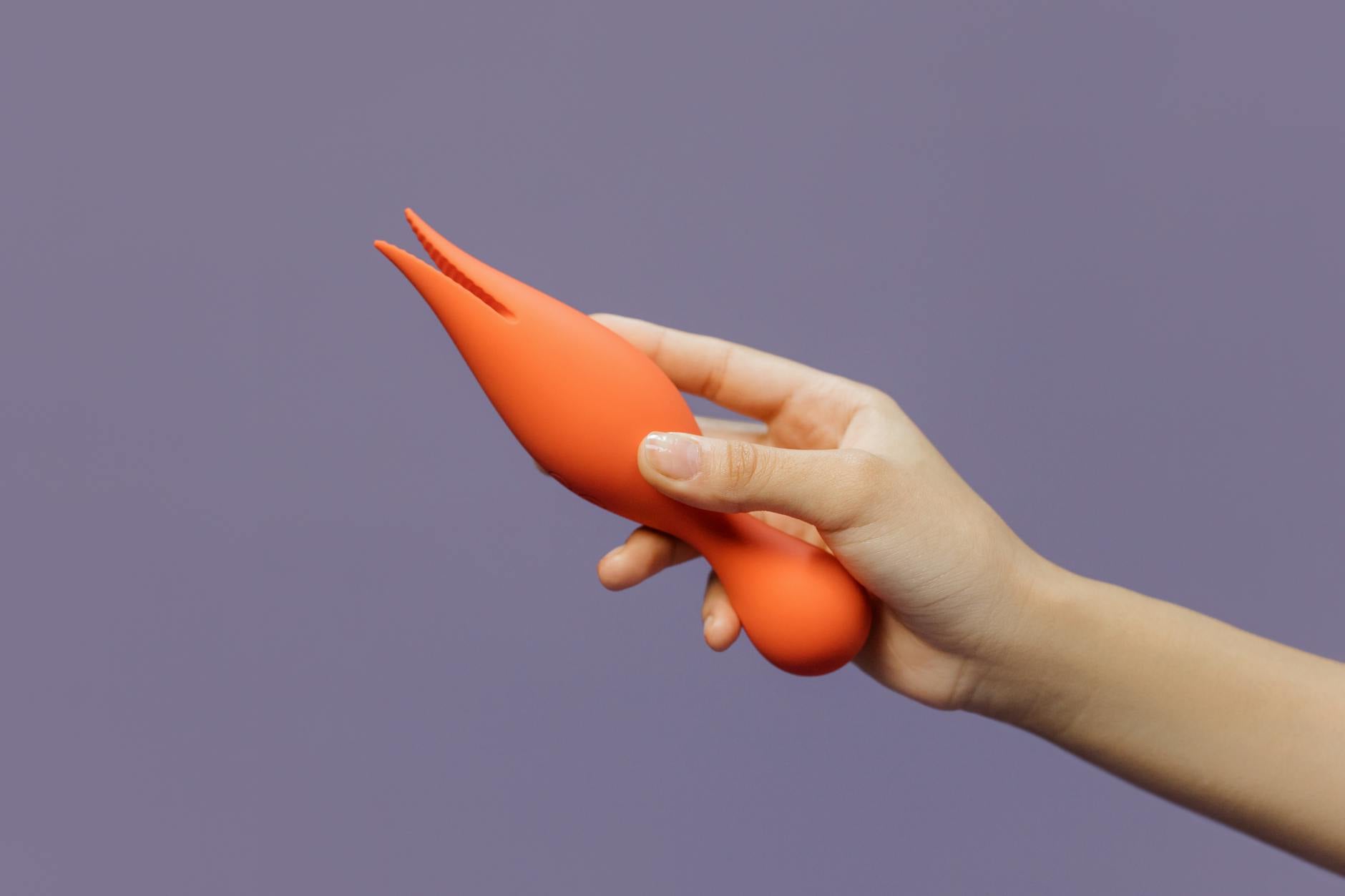
Here's where lemon clitoral vibrators become genuinely useful as a relationship tool, not just a toy. They shift the focus off what your partner's body is doing and onto what your body is experiencing. That sounds small. It's actually transformative.
When a partner with performance anxiety sees the vibrator doing the work, something shifts psychologically. The pressure lifts. They can stop trying to be the source of your pleasure and start being present with you while you experience it. That's a completely different nervous system state.
They're no longer in a performance mindset. They're in a partnership mindset.
The setup conversation matters more than you think
Before you bring lemon sexual toys into the picture, you need one conversation. Not about the toy itself. About why you want to use it, and specifically that it has nothing to do with his adequacy.
Here's roughly what this sounds like: "I want to use a vibrator with you because I really enjoy it, and I'd like us to explore that together. This isn't about anything you're not doing. It's about adding something we can both enjoy."
Notice what this does. It frames the toy as an addition, not a correction. It puts you both on the same team.
If your partner has a history of performance anxiety, he's probably spent years interpreting neutral requests as criticism. Your job here is to be unusually explicit that this is collaborative, not compensatory.
How to actually use lemon vibrators together when anxiety is in the room
Five things that help.
Start with low stakes. Use the vibrator on yourself while your partner is present but not required to do anything. Let him see that you're having a good time. Let him feel the permission to just exist in the space without performing. This sounds boring, but it's the most anxiety-reducing setup possible.
Hand him the control. Once he sees you enjoying it, invite him to hold the vibrator while you guide him. He's not responsible for your pleasure anymore. He's just following your direction. That's dramatically less threatening than trying to intuit what feels good.
Use it as a warm-up, not the main event. Lemon clitoral vibrators work brilliantly as foreplay. Use one for five to fifteen minutes, then set it aside and transition to partner sex. This keeps the toy from becoming the only way you can reach orgasm. It stays a tool, not a crutch.
Talk while you're using it. "That feels amazing right now." "A little faster." "Stay there." Narration does two things. It gives your partner real-time feedback instead of leaving him guessing. It also keeps you both grounded in the present moment instead of anxious about what's supposed to happen next.
Normalize the vibrator as just another part of your together time. The more casual you are about it, the less weaponized it becomes in his mind. Lemon adult toys aren't a referendum on his body. They're just a thing you enjoy using together, the same way you might use a massage oil or a particular position.
The nervous system piece
Performance anxiety lives in the sympathetic nervous system. Fight or flight. Your partner's body is essentially in mild threat mode, even though intellectually he knows there's no threat.
When he's focused on performing, that sympathetic activation gets worse. When he's focused on being present with you while you experience pleasure from the vibrator, his nervous system can actually downregulate. He's not being asked to do anything. He's being invited to witness something he loves.
Over time, this rewires his nervous system response to sex. He learns that he can be present, that his presence matters, and that he doesn't have to be the engine of your pleasure for sex to be good. That's where the real healing happens.
What shifts in the relationship
I've worked with couples where introducing a lemon clitoral vibrator actually saved the sex life because it addressed the real problem: the performance anxiety was making both partners anxious. You were anxious about his anxiety. He was anxious about your pleasure. Nothing good happens in that cycle.
When you add a tool that takes the pressure off both of you, something opens up. You start having sex again instead of performing sex. You start playing instead of proving something.
The vibrator is almost incidental. What actually changes is the dynamic. And that changes everything.
The boundaries that matter
One thing to be clear about: if your partner is using the performance anxiety as a reason to completely check out of intimacy, or if he's actively hostile to the idea of you having pleasure that doesn't center on him, that's not a vibrator problem. That's a resentment problem or a control problem. Those need a different kind of conversation, possibly with a therapist.
But if he loves you and his anxiety is just getting in the way of you both enjoying each other, lemon vibrators can be genuinely helpful. They give you both permission to relax into pleasure instead of straining toward performance.
The other thing nobody mentions
When you use a lemon vibrator with a partner who has performance anxiety, you might notice he's more relaxed than he's been in months. You might notice he actually stays present in his body instead of dissociating. You might notice he starts initiating sex again because the stakes feel lower.
That's not because the vibrator is magic. It's because you've both signaled to your nervous systems that this is safe, that pleasure is collaborative, and that he doesn't have to earn his place in your intimacy. That matters more than anything the toy itself can do.
Quick reality check
Lemon sexual toys aren't a fix for deep relationship problems, and they won't magically resolve trauma or serious anxiety without other support. But if your partner's performance anxiety is functional and situational, they can be a genuine asset to reconnection. They take the pressure off in a way that lets both of you actually enjoy each other again.
Frequently asked questions
Will using a vibrator make my partner feel inadequate?
Not if you frame it right. The key is positioning the vibrator as something you want to explore together, not as evidence that he's not enough. Plenty of partners find it genuinely hot to see their partner enjoying a lemon vibrator. It shifts the dynamic from judgment to collaboration.
How do I bring this up without making him feel bad?
Start with curiosity, not critique. "I've been thinking about trying a vibrator together, and I'd love to explore that with you" is completely different from "I need this because you're not doing enough." Keep the conversation focused on what you want to add, not what's missing.
What if he says no?
Respect that. But dig a little deeper on why. Is it genuine discomfort, or is it anxiety disguised as rejection? If it's anxiety, you might revisit the conversation later when he feels safer. If it's genuine discomfort with the toy itself, you can respect that boundary without dropping the larger conversation about his anxiety and how it's affecting both of you.
Can we use a lemon vibrator if we don't usually talk about sex?
Introducing a vibrator will probably require more communication than you're currently having. And that's actually good. Sometimes you need a concrete tool to break the silence. If talking is difficult, you might start smaller. "I want to try this together" might be easier than launching into a full conversation about your sex life.
How do I know if his performance anxiety is something we can work through together, or if we need a therapist?
If the anxiety is keeping him from having sex at all, or if he's experiencing erectile dysfunction that's causing serious distress, that's a conversation for a sex therapist or a GP who specializes in this. Performance anxiety often has a physical component and sometimes medication or professional support can help. A vibrator is a tool for a couple with functional anxiety, not a replacement for professional care.
What if the vibrator makes his anxiety worse?
Stop using it. Some people find that introducing a toy amplifies their insecurity instead of relieving it. If that's your partner, that's real information. The goal isn't to use a vibrator. The goal is to rebuild pleasure and connection. If the vibrator is working against that, set it aside and explore what would actually help him feel secure.
The bigger picture
Performance anxiety is usually about the fear that you're not enough. Lemon vibrators work in this context because they're a concrete way of proving to your partner's nervous system that you're both safe, that pleasure is shared, and that his job isn't to perform but to be present. That shift changes everything.