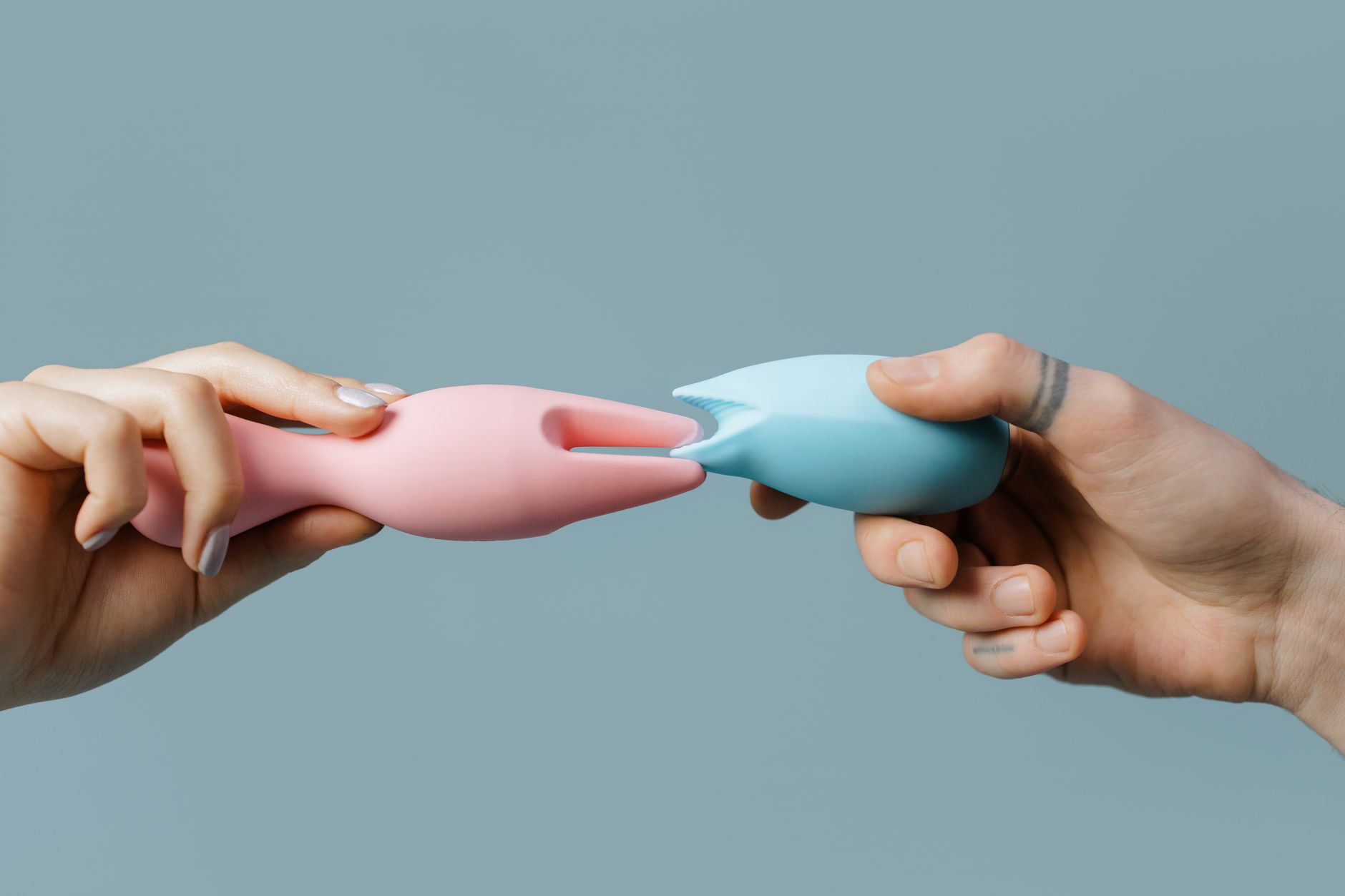
Let's talk about what happens after the fight
Relationship conflict kills arousal. It's not dramatic or complicated. Your nervous system goes into protection mode, cortisol spikes, and desire just evaporates. Even after you've talked things through, after apologies land, the body takes longer to trust that things are actually safe again. Pleasure requires vulnerability, and vulnerability feels impossible when you're still in repair mode.
Here's what I've seen work: reintroducing pleasure isn't about jumping straight back into sex. It's about building a new language around touch, sensation, and desire together. Lemon vibrators, specifically, offer something couples often miss during recovery. They're not a return to what was. They're a restart.
Why the nervous system needs a reset, not just a conversation
When conflict happens, especially if it's been prolonged or repetitive, both partners' nervous systems learn to brace. You might have resolved the issue logically, but your body doesn't automatically switch back to openness. This is particularly true for the partner who felt hurt. Trust happens in the body before it happens in the mind.
Lemon vibrators work here because they shift the dynamic from "performing sex together" to "exploring sensation together." That difference matters enormously. One feels like you're trying to get back to normal. The other feels like you're building something new.
There's also a practical advantage. When arousal has been low, clitoral stimulation from a lemon sucker device like the Lemon vibrator works faster and more reliably than partner touch alone. That means less time spent waiting for arousal to build, less performance anxiety, and more actual sensation happening. Quick success rebuilds confidence.
Starting with non-sexual touch and conversation
Before introducing any toy, reconnect through non-sexual touch. This sounds obvious but it's skipped constantly. Hold hands. Sit close. Let your nervous systems remember that physical contact doesn't automatically lead to sex or conflict.
During this phase, talk explicitly about what you both want from reconnecting physically. Not "should we have sex again" but "What would feel safe and good right now?" One partner might want to focus on sensation. The other might want to rebuild trust through slowness. Both are valid.
When you're both ready to introduce the lemon clitoral vibrator, frame it this way: "This is for you to feel good. I get to be here and watch you feel good. That's it for now." Removing the pressure to perform simultaneous pleasure removes a huge block.
How to use lemon vibrators together after conflict
Start with solo exploration. If you're the receiving partner, spend a session alone with your lemon vibrator. Not to reach orgasm necessarily. Just to remember what sensation feels like, and to identify what patterns work for you right now. After conflict, your body's responses might have shifted. Your preferences matter.
Then bring your partner in. Start clothed. Let them hold the toy while you're still wearing underwear. The sensation is muted but present. This is about building comfort and closeness without the full intensity. You can talk, laugh, be playful. There's no pressure to escalate.
When you move to direct stimulation, start on lower intensity settings. Pattern 1 or 2 on most lemon vibrators. The goal isn't to chase orgasm. It's to flood your body with "this feels good" signals. Those signals matter neurologically. They recalibrate your brain's association with touch from your partner.
The conversation piece (the part everyone skips)
Honestly? The toy is maybe 40% of what makes this work. The other 60% is what you're actually saying and doing while it's happening.
If your partner is using the vibrator on you, they should be present. Asking how it feels. Noticing what makes you respond. Making eye contact. This is the trust rebuild happening in real time. You're saying with your body: "I see you, I care about your pleasure, I'm not checking out."
On the flip side, if you're the partner holding the toy, you're saying: "I want to know what makes you feel good." That's profound after conflict. You're not expecting your partner to be the same person they were before the fight. You're getting curious about who they are now.
If conversation during touch feels awkward (which it will at first), name that. "This feels weird." "I'm nervous." "I want to keep going though." Awkward honesty is way more intimate than smooth performance.
When one partner has more shame than the other
Often, after conflict, one partner carries more residual shame. They feel like they "caused" the distance or that they're less desirable now. This person might struggle with receiving pleasure. Shame makes you want to turn inward.
If this is you, slow down even more. The lemon vibrator isn't a shortcut past the shame. It's just a tool. You might need to spend several sessions just getting used to being touched or touching yourself while your partner is nearby. That's not backwards. That's you moving at your nervous system's actual pace.
If your partner is struggling with shame, don't try to convince them they're desirable or that the conflict didn't matter. Just be consistent. Show up. Use the toy without commentary. Let pleasure speak for itself.
Managing realistic expectations
After conflict, the first time you have sex or use a toy together is often not great. The second time is usually better. The fifth time might be actually good. Don't expect instant reconnection. The nervous system heals gradually.
You might also notice that arousal still takes longer than it did before the conflict. That's normal. Desire is rebuilding. Some couples find that lemon vibrators help specifically because they bypass the arousal speed issue and get to sensation faster. That takes pressure off the whole experience.
Also realistic: this won't "fix" the relationship if the underlying issues aren't addressed. If the conflict came from deeper incompatibility or repeated betrayal, using a toy together is a nice addition to couple's therapy, not a replacement for it. Sex toys are for pleasure and reconnection, not for patching broken foundations.
When to escalate and when to stay here
There's no timeline for moving from "using lemon vibrators with intention" back to "regular partnered sex." Some couples spend weeks in this phase. Others are ready to move on after a few sessions.
The signal that you're ready to escalate is pretty straightforward: you're both showing up, you're both present, arousal is building without effort, and there's genuine ease in the room. Not performance. Ease. When that's happening, you can start introducing partnered stimulation or your own pleasure alongside the toy.
But there's nothing wrong with staying in this phase for as long as it feels good. Some couples discover they actually prefer this rhythm of using lemon vibrators and partner touch combined. That's not a holding pattern. That's just what works for you now.
The underneath thing that actually matters
What makes lemon vibrators work during relationship recovery isn't the vibration. It's that using one together is an act of choosing each other again. You're saying, "I want to rebuild this. I want to feel good with you. I'm willing to be vulnerable and awkward and present."
That choice, repeated consistently, is what actually heals. The toy is just the medium through which that choice gets expressed.
People Also Ask
How long after a fight should we wait before using toys together?
Wait until the immediate conflict is resolved and you've had at least one genuine conversation about what happened. Don't use toys as a way to avoid talking things through. But you don't need perfect healing either. Introducing lemon vibrators can actually be part of the healing process, not something you do after healing is complete. Most couples I work with feel ready within a week or two of real repair work.
Will using a lemon vibrator together feel awkward if we're still rebuilding trust?
Yes, absolutely. It will probably feel weird and awkward. That's fine. Awkward honesty is actually more intimate than smooth performance. Name the awkwardness. "This feels weird, but I want to try." "I'm nervous." That vulnerability is the trust rebuild happening in real time. Expect the first session to be clunky. The second is usually better.
Can lemon vibrators work if one partner feels more responsible for the conflict?
Yes, but go slower. The partner who feels shame might struggle with receiving pleasure. That's protective. Don't push. Let them decide the pace. Using the lemon vibrator without pressure, with genuine presence from their partner, often helps dissolve shame more effectively than reassurance or apologies. Let pleasure speak.
What if we try using a lemon clitoral vibrator and nothing happens? No arousal, no pleasure.
Take that as information, not failure. Arousal after conflict is genuinely hard. Your nervous system is still in protection mode. You might need a few more weeks of non-sexual touch and conversation before adding the toy. Or you might need to address deeper issues in couple's therapy. A lemon vibrator is a tool for pleasure, not a fix for broken intimacy.
Is it better to use a lemon vibrator alone first, or together?
Both have value. Using it alone first lets you reconnect with your own pleasure without an audience. That's confidence-building. Using it together earlier builds shared experience and novelty. There's no wrong order. Do what your nervous system needs.
How do we keep from falling back into old patterns after using toys together?
Consistency and communication. Use the lemon vibrator regularly, not just when you're in crisis mode. Keep talking about what feels good and what doesn't. And honestly, probably some couple's therapy if the original conflict was serious. Toys plus therapy plus intention is the winning combination.
Reconnecting after conflict is possible, and it's worth doing slowly and with presence. A lemon vibrator can be part of that journey. But the real work is showing up, being vulnerable, and choosing each other again and again.